
Rohit Sharma Built Mumbai Indians Into the IPL's Most Decorated Franchise
Authored by baaballufabet.com, 15/04/2026
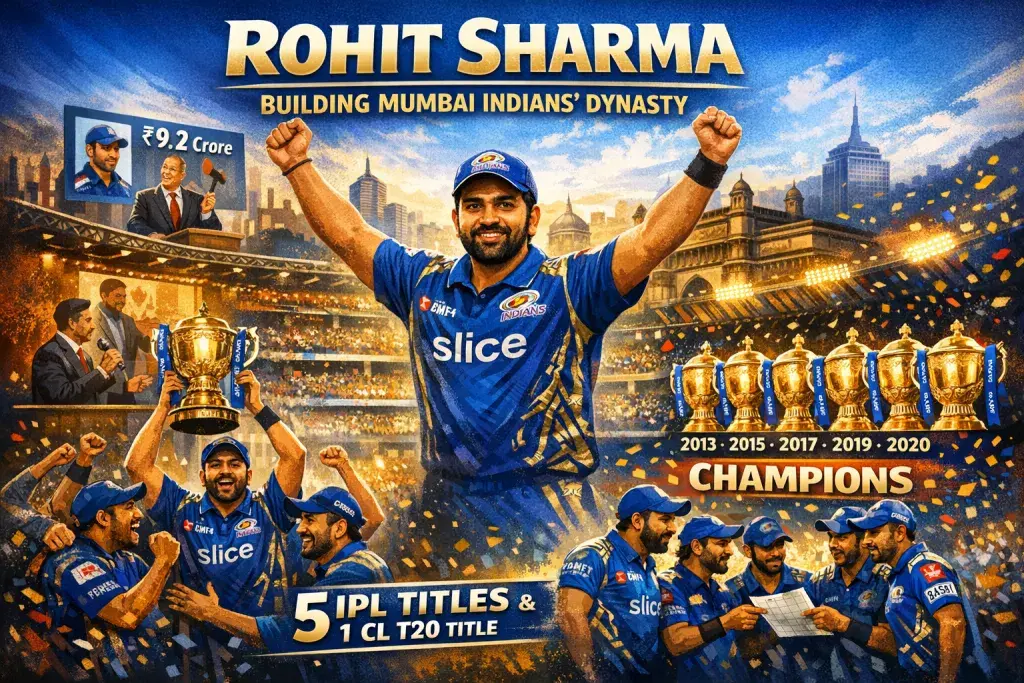
Fourteen years after Mumbai Indians made a calculated gamble at the 2011 IPL Mega Auction — paying 9.2 crore rupees to secure a 23-year-old Rohit Sharma — the returns on that investment stand as one of the most consequential decisions in the history of Indian franchise cricket. What followed was not just personal success for Rohit, but a systematic transformation of a winless franchise into the most title-rich side the competition has ever produced. The anniversary of that auction marks an appropriate moment to examine how leadership, culture, and continuity created something genuinely rare in professional cricket.
From Auction Table to Architectural Force
Rohit Sharma arrived at Mumbai Indians carrying credentials — he had already collected an IPL title as a player with Deccan Chargers — but no one could have reasonably projected the scale of what was coming. He spent his first two seasons at the franchise as a senior member of the batting order, without silverware to show for it. The decision to hand him the captaincy ahead of the 2013 edition was bold by any measure. The franchise was still searching for its first title. Placing that responsibility on a 25-year-old was a statement of intent, not merely a selection call.
The results came immediately. In his debut year leading the side, Rohit guided Mumbai Indians to the title, defeating Chennai Super Kings in the final. He then led them to the Champions League T20 title in the same calendar year — two major honours within months of being handed the role. That double in 2013 did not happen by accident. It reflected a combination of astute decision-making under pressure, an ability to read situations without being reactive, and a calm that proved infectious across the group.
The Pattern of Dominance and What Sustained It
What followed over the next several years established a pattern unusual in franchise cricket anywhere in the world. Mumbai Indians claimed further titles in 2015, 2017, and 2019 — a rhythm so consistent that the franchise earned a reputation for peaking precisely when conditions demanded it most. The 2020 edition added a sixth title and a particular distinction: Mumbai Indians became only the second side in the competition's history to successfully defend a title, following their rivals from Chennai. Retaining a title demands something beyond raw ability. It requires organisational coherence, composure under expectation, and a captain who does not fracture under the weight of being favourites.
Rohit's captaincy style is not easily reduced to tactics alone. Those who have observed him closely over the years point to a quality harder to quantify — the capacity to manage personalities, rotate responsibilities, and allow others to perform without suffocating them with instruction. Young cricketers developed into significant figures under his watch. Established names performed at career-best levels. That kind of environment does not emerge by accident; it is constructed deliberately, season after season.
Legacy, Succession, and What the Record Actually Means
When Hardik Pandya took over the captaincy ahead of the 2024 edition, Rohit's tenure with Mumbai Indians as their leader formally concluded. He departed having guided the franchise to five IPL titles and one Champions League T20, a record of sustained achievement without parallel in the competition's history. No other individual has captained a side to that many IPL titles. MS Dhoni, whose influence over Chennai Super Kings has been similarly transformative, is the nearest comparison — and that comparison alone places Rohit in the uppermost tier of franchise cricket leadership.
The broader significance extends beyond individual honours. Rohit Sharma's tenure demonstrated that franchise success in the shortest format is not purely a function of the strongest assembled roster. Structure, temperament, and the intelligence to make decisions under compressed time frames matter just as much. Mumbai Indians under Rohit operated from a clear philosophy: back your people, absorb early setbacks without panic, and produce when the pressure is at its highest. Fifteen years after the auction room made its fateful call, that philosophy is written across six trophies and into the fabric of how Indian franchise cricket understands leadership.